
Hydrovac daylighting in Edmonton
Before your ground disturbance starts, we expose what's been marked and confirm where it sits and how deep it runs.
- Since September 2015
- 15 hydrovac trucks, 2 dump trucks, a skid steer
- 24/7 dispatch


Where it comes in
Ground that's been built on before often holds several services, crossing and crowding each other out of sight. A shoring job generally starts with the service exposed, and replacing a valve, connection or splice often does too. Daylighting is also how a line's location and depth get confirmed before anything mechanical digs within a metre of it. For trenches and pile holes near buried services, our trucks can do the digging themselves. It's part of the work we do across civil, municipal, industrial, oilfield and residential sites.
How the dig runs
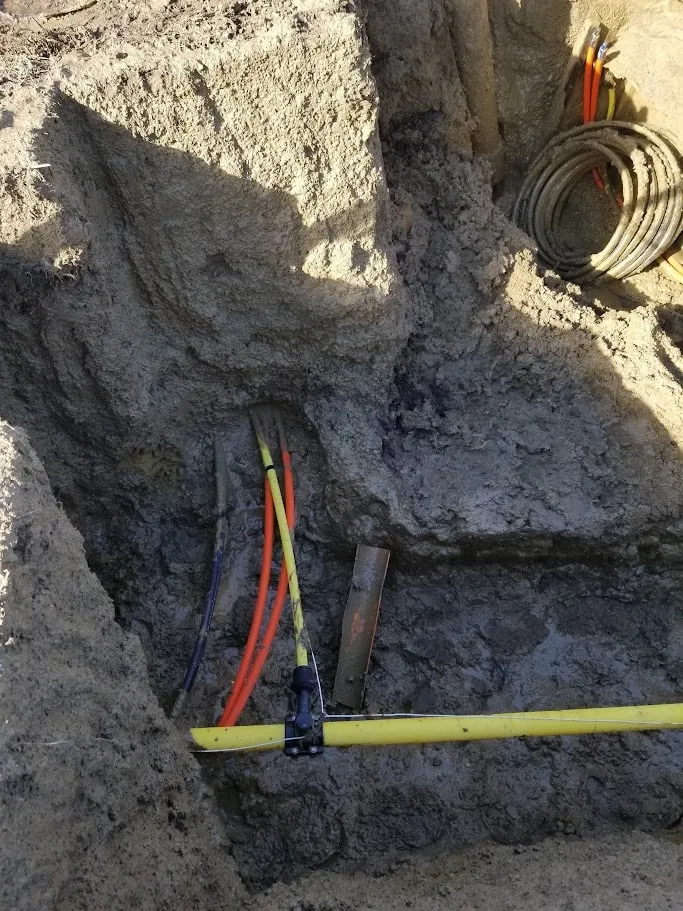
Digging starts right over the paint. The operator varies the water pressure and vacuum with how sensitive the service is, as it comes into view. It's uncovered without a bucket or auger, so there's less likelihood of damaging it. Your crew can identify it, measure its depth and plan the rest of the work from there.
Remote hose handles the spots a truck can't reach: inside existing structures, down in basements, the cramped corners of a busy site.
A targeted hole
A daylight hole takes out a targeted amount of material, not a full excavation. Moving less earth generally means less ground shifting, and shifting ground can damage a neighbouring service the dig never touches. It also leaves less for backfilling, with better compaction where the ground stays as it was. When you're finished below, we close the hole with our own dump trucks and skid steer.
Common questions
Is daylighting the same as potholing?
Same job. Daylighting utilities and daylighting excavation mean it too.
Is a locate request needed before you dig?
Put a request in with Utility Safety Partners, Alberta's locate service, before we come out. There's no charge, and five working days' notice is what they suggest. Their member utilities mark their own lines. A line a property owner put in themselves isn't on any utility's records, so it may need a private locator. Utility locating on our side means exposing what's been marked.
What happens when the ground freezes?
We keep digging. Our trucks heat their water to cut through it, and locally the frost can stay for up to five or six months.
Lines marked and ready?
Call us to get a truck booked, or send the job details for a quote.